
Interactive Photo Diagram
Water Pressure & PRV
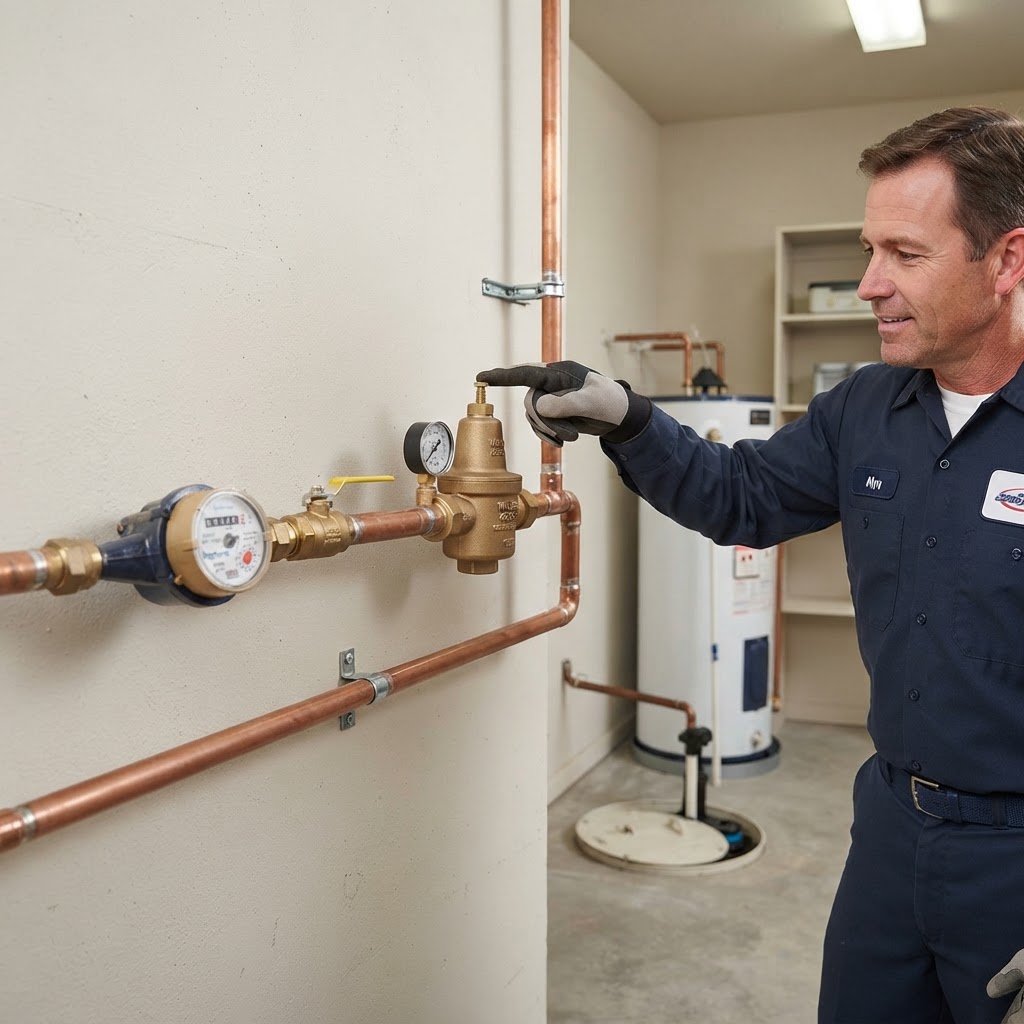
The PRV reduces higher incoming pressure to an appropriate pressure for the home's plumbing system.
Reference checked: component relationships and terminology were reviewed against manufacturer documentation from Watts. This is original Classic Plumber educational artwork, not a manufacturer drawing.
Tap a numbered marker to learn what that part does.
Overview
Water pressure is the force that pushes water through your pipes. Low pressure can reduce fixture performance, while excessive pressure can stress fixtures, valves, supply lines, and appliances. Where incoming utility pressure is higher than the building should receive, a pressure-reducing valve (PRV) may be used to regulate it to an appropriate range.
How It Works
Water enters from the utility at a pressure that varies by system, elevation, demand, and location. Where a PRV is installed, it reduces the incoming pressure to the building's set range. High or low house pressure can involve the PRV, valves, service-line restrictions, utility conditions, or other factors, so a gauge reading is a useful starting measurement rather than a diagnosis by itself.
Key Components
Pressure Reducing Valve (PRV)
Reduces high incoming street pressure to a safe house pressure.
Pressure Gauge
Screws onto an outdoor spigot. Shows your home's water pressure in PSI.
Main Shutoff
The valve that controls all water into the house. Often near the PRV.
Incoming Service Line
The pipe from the water meter to the house. Before the PRV — at street pressure.
House Distribution Piping
Everything after the PRV. Protected from high street pressure.
Common Issues
Low pressure throughout house
Failing PRV, clogged PRV screen, or partially closed main valve.
Read the guideHigh pressure
May involve a missing, misadjusted, bypassing, or failing PRV, or another supply-side condition. Sustained pressure above 80 PSI should be evaluated.
Read the guidePipes bang or hammer
High pressure or no air chamber — water slams when a valve closes.
Pressure fluctuates
Failing PRV or supply issue.
Maintenance Tips
- Test pressure annually with a gauge at an outdoor spigot. Ideal: 40–60 PSI.
- PRVs typically last 10–15 years. If pressure changes, the PRV may need replacement.
- If pressure is above 80 PSI, have the pressure-control setup evaluated rather than assuming the existing PRV automatically needs replacement.
- If you have an expansion tank on your water heater, check it when you check the PRV.