
Interactive Photo Diagram
Two-Bowl Kitchen Sink Plumbing
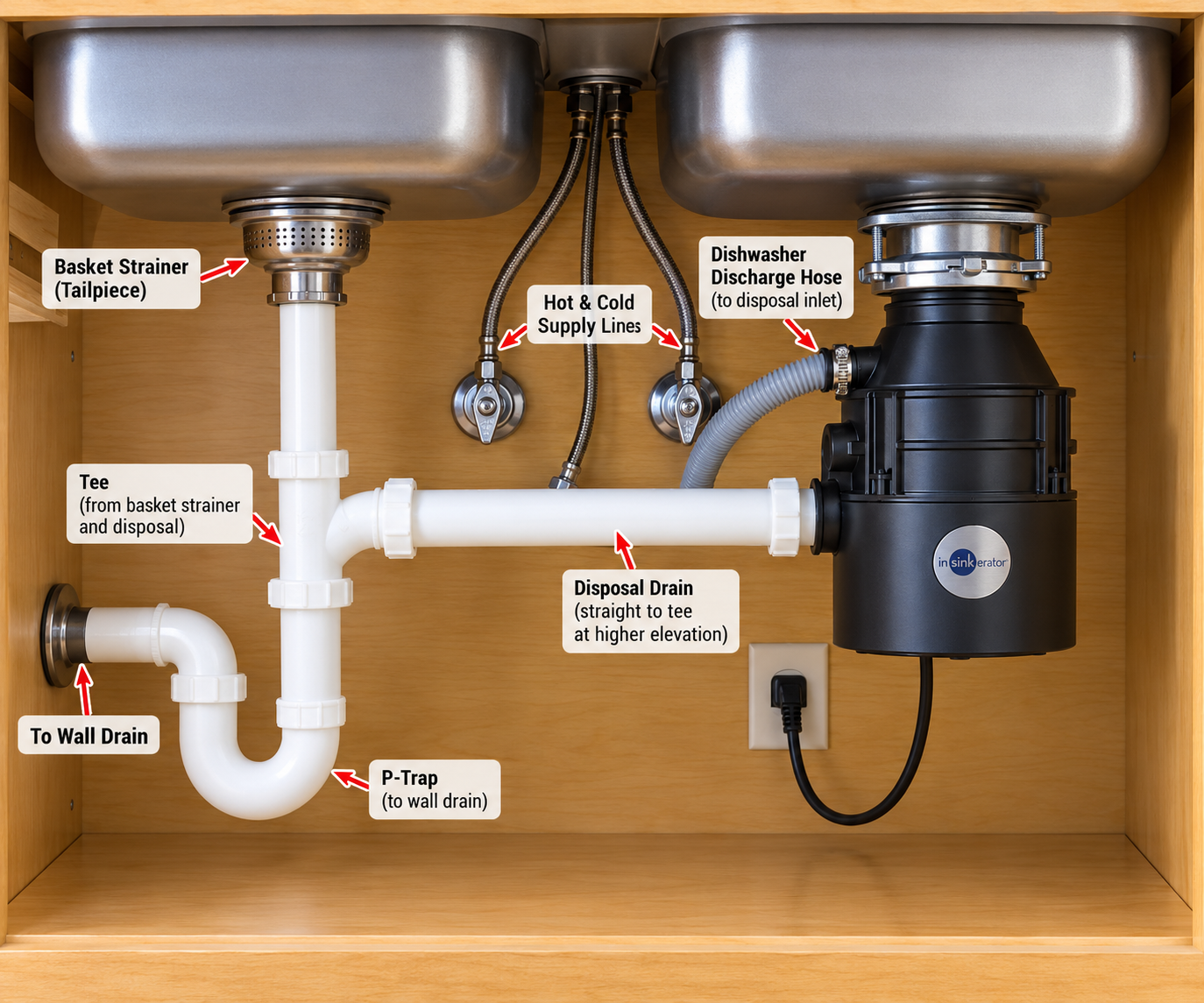
A realistic double-bowl kitchen sink — one bowl with a garbage disposal, the other with a basket strainer, joined by a continuous waste assembly with a single P-trap and a high-loop dishwasher drain.
Reference checked: component relationships and terminology were reviewed against manufacturer documentation from Oatey / Dearborn and InSinkErator. This is original Classic Plumber educational artwork, not a manufacturer drawing.
Tap a numbered marker to learn what that part does.
Overview
Under your kitchen sink, two systems work side by side: the water supply (hot and cold lines going up to the faucet) and the drain (carrying wastewater down through the disposal and P-trap to the wall). Most under-sink leaks come from loose slip-joint connections or aging supply lines — both are easy to spot with a dry paper towel and a flashlight.
How It Works
Water comes in through the supply lines and goes out through the drain. The disposal grinds food waste before it enters the P-trap, which holds water to block sewer gas. The dishwasher drains through a hose connected to the disposal, ideally in a high-loop configuration to prevent backflow.
Key Components
Basket Strainer
The drain opening with a removable strainer basket that catches food debris.
Garbage Disposal
Grinds food waste so it can flow through the drain. Mounted to the sink flange.
P-Trap
Holds water to seal out sewer gas. Can be removed for cleaning.
Shutoff Valves
Hot and cold angle-stop valves on the back wall. Turn off for faucet repairs.
Dishwasher Drain Hose
Connects the dishwasher to the disposal. Should have a high-loop configuration.
Common Issues
Leaking under sink
Loose slip-joint nuts or aging supply lines. Check with a dry paper towel.
Slow drain
Food or grease buildup in the P-trap or disposal. Remove the trap to clean.
Dishwasher not draining
Knockout plug not removed from disposal inlet, or clogged hose.
Disposal humming but not spinning
Jam. Use an Allen wrench in the bottom socket to free it.
Maintenance Tips
- Check under-sink connections monthly with a dry paper towel — catch slow leaks early.
- Run the disposal with cold water and a bit of dish soap to flush debris.
- Keep the dishwasher drain hose in a high-loop configuration to prevent backflow.
- Know where your shutoff valves are — they're essential for faucet repairs.