
Interactive Photo Diagram
Sump Pump Basics
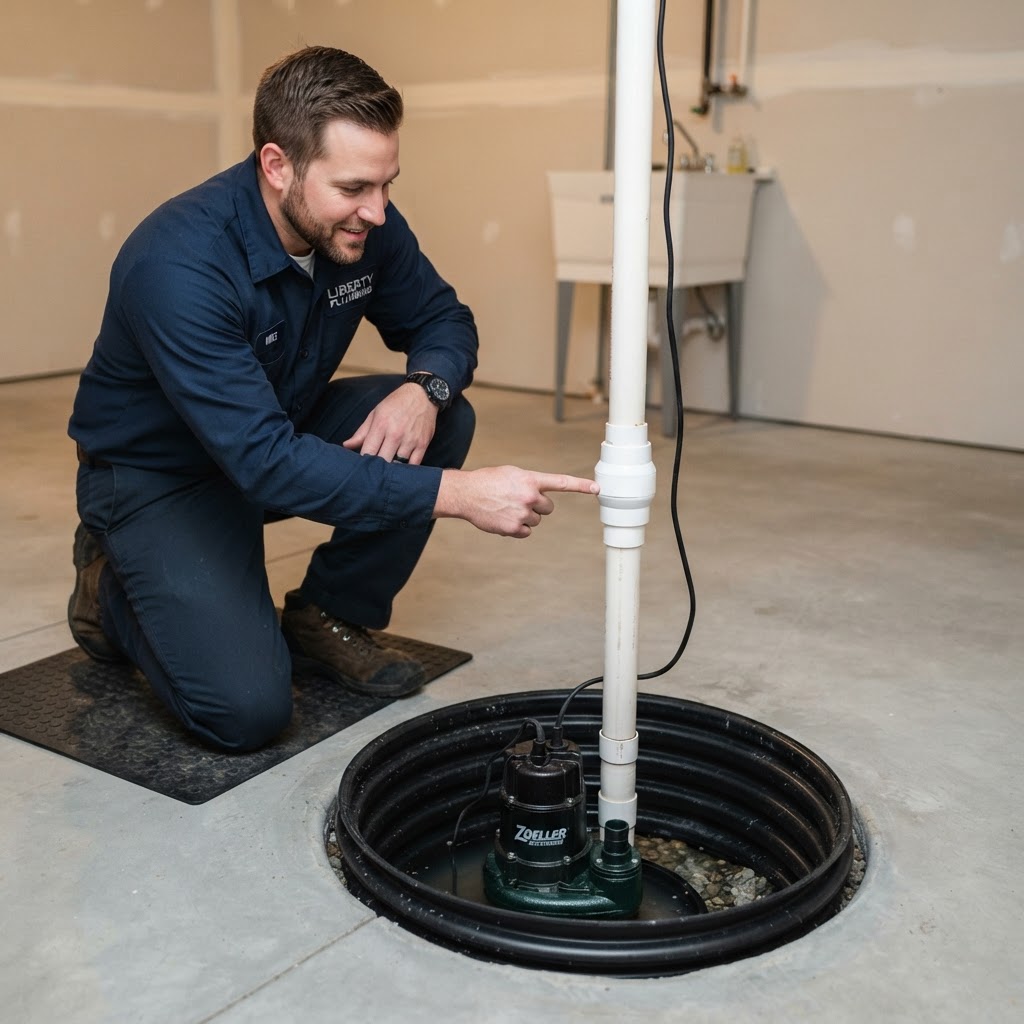
A sump pump moves water out of your basement or crawlspace before it can flood. Understanding the components helps you maintain it.
Reference checked: component relationships and terminology were reviewed against manufacturer documentation from Zoeller. This is original Classic Plumber educational artwork, not a manufacturer drawing.
Tap a numbered marker to learn what that part does.
Overview
A sump pump sits in a pit in your basement or crawlspace floor. Water from perimeter drains or natural seepage collects in the pit. When the water reaches a set level, a float switch activates the pump, which pushes water up and out through a discharge pipe. A check valve prevents water from flowing back. A sump pump is your last line of defense against basement flooding — and it needs power, maintenance, and a backup plan.
How It Works
Water collects in the sump pit from perimeter drains or seepage. As the water level rises, the float switch lifts and activates the pump. The pump pushes water up through the discharge pipe and out of the house. A check valve prevents the water in the pipe from flowing back into the pit when the pump stops. The cycle repeats as water continues to enter the pit.
Key Components
Sump Pit / Basin
Collects water. Should be clean and deep enough to activate before water reaches the floor.
Pump
Submersible pump that pushes water up and out through the discharge pipe.
Float Switch
Turns the pump on at a set water level. The most common failure point.
Check Valve
Prevents water from flowing back into the pit after the pump shuts off.
Discharge Pipe
Carries water out of the house. Should exit at least 10–20 feet from the foundation.
Common Issues
Pump won't turn on
Float stuck, switch failed, or no power. Check the outlet and test the float.
Pump runs constantly
Float stuck in the on position, or water flowing back (failed check valve).
Water flows back after pump stops
Failed check valve. Replace it.
No water during power outage
No backup. Consider a battery backup system.
Maintenance Tips
- Test the pump quarterly: pour a bucket of water in the pit and verify it activates.
- Clean the pit of debris that could clog the pump intake.
- Check the discharge point outside — make sure it's far from the foundation and not blocked.
- Consider a battery backup system for power outages during storms — that's when you need it most.